The Treasure of Shammaroush: The Guardian Beneath the Hill
I inherited the map from my grandfather, a former lieutenant in the French army. He had kept it for as long as I could remember, folded inside a small leather case that he rarely allowed anyone to touch.
After his death, I found it among his personal belongings.
The paper was old and fragile, covered with faded lines, unfamiliar markings, and a few words written in French. Some of the symbols appeared to be Roman. In one corner, my grandfather had written a name in his own handwriting: Shammaroush.
I had never heard of the place.
According to the notes on the map, it was somewhere in North Africa, near the remains of an ancient Roman settlement. My grandfather had drawn a large cross over a patch of land and circled it twice in red pencil. There were no details about the treasure itself, only a short note suggesting that something valuable had been hidden beneath the ground centuries earlier.
I knew the map might lead nowhere. It could have been an old soldier’s curiosity, a copy of some forgotten legend, or simply a story my grandfather had never found the time to finish.
Still, I could not stop thinking about it.
I was French, and I had never been the sort of person who believed in curses or supernatural stories. I trusted documents, evidence, and things I could see with my own eyes. If there was a Roman treasure buried somewhere in Tunisia, I wanted to find it.
So I travelled to Mahdia.
For two days, I asked people about the name written on the map. Most had never heard of Shammaroush. Some shrugged and sent me elsewhere. Others looked at me as though I had asked about a place that was better left alone.
I was beginning to think my journey had been a waste of time when I met a young man who said he knew the location.
His name was Riad. He was in his twenties, thin, and quiet, with a narrow face and an easy smile. When I showed him the name on the map, he studied it for a moment before telling me that some people in the area called the place Shammar, a name connected to an old expression meaning the Sea of Treasures.
He claimed he knew the hill I was looking for.
For five hundred dinars, he offered to take us there.
I accepted.
My friend Sami had travelled with me. He was more cautious than I was, and he had spent much of the previous day telling me not to trust strangers who claimed to know the location of buried treasure. Nevertheless, he agreed to come.
The next day, the three of us set out for the place Riad had described.
It was around midday when we arrived.
The area was isolated, far from the busy roads and the familiar sounds of the town. A large mound rose from the surrounding land, covered in dry grass and patches of bare earth. There were a few scattered stones, some half-buried in the soil, but nothing resembling a palace, a temple, or any impressive ruins.
If a civilisation had once stood there, the land had swallowed nearly every trace of it.
I walked around the mound, comparing the landscape with the markings on my map. The general shape seemed right, but I could not identify any precise landmark. I felt disappointed. I had imagined walls, pillars, perhaps the remains of an ancient building. Instead, there was only an empty hill beneath a cloudless sky.
I was about to suggest returning to Mahdia when I noticed that Riad had fallen silent.
He stood several metres away, staring at something near the top of the mound.
At first, I thought he was simply tired. Then he began muttering.
The words were low and hurried. I could not recognise the language. Sami called his name, but Riad did not answer. He continued speaking, his eyes fixed on the same point.
Sami approached him and placed a hand on his shoulder.
Riad suddenly turned.
“What is wrong with you?” Sami asked.
Riad answered with another string of unintelligible words. His voice had changed. It sounded deeper, rougher, as though two voices were trying to speak through the same mouth.
Sami stepped back and told him to calm down. Riad moved towards him, and the two began arguing. I tried to intervene, but neither seemed to hear me.
Then Riad lunged.
He seized Sami by the head and bit down on his ear.
The sound Sami made is something I still remember clearly. I grabbed Riad by the shoulders and tried to pull him away, but he held on with a strength that seemed impossible for someone of his size. When he finally released Sami, part of his ear was torn away.
Blood ran down the side of Sami’s face.
I stumbled backwards, horrified.
Riad looked at us.
For a moment, I struggled to recognise the young man who had guided us there. His expression seemed distorted, his jaw held at an unnatural angle, and his eyes had a fixed, animal quality that made my stomach tighten. It was not simply anger. There was something in his face that did not belong.
Then he turned and walked away across the mound.
I wanted to follow him, to demand an explanation, but Sami was bleeding heavily. I pressed a cloth against his wound and helped him down to the road. A passing driver stopped when he saw us, and together we managed to get Sami to the hospital.
By the time I looked back towards the hill, Riad had disappeared.
Sami needed treatment and remained in the hospital for about a week. I visited him whenever I could. During those days, the shock of what had happened gradually gave way to a strange friendship. I had known Sami for years, but sitting beside his hospital bed, listening to him complain about the food and make jokes about his bandages, brought us closer than before.
We did not speak much about Riad at first.
Neither of us knew what to say. The attack had been so sudden and so violent that ordinary explanations felt inadequate. I tried to convince myself that Riad might have suffered some kind of medical episode, perhaps brought on by a mental illness or an unknown condition. That explanation was not satisfying, but it was at least possible.
A week later, Sami was discharged.
We spent the afternoon together at a small café, away from the hospital. Eventually, he brought up the incident himself.
“I know Riad,” he said. “Or I thought I did. He wasn’t a man who would attack someone like that.”
“People can change when something is wrong with them,” I replied.
Sami shook his head.
“You didn’t see his face the way I did.”
“I was there.”
“Then you know what I’m talking about.”
He paused before continuing.
“I think he was possessed.”
I almost laughed, but something in his expression stopped me.
“Possessed by what?”
“A jinn,” he said. “Something had entered him. I don’t know how else to explain it.”
I told him that I did not believe in such things. I said fear could distort memories, and that an unexplained event did not automatically mean something supernatural had taken place.
Sami did not argue. He only looked down at the table.
“Believe whatever you want, William. Just don’t go back to that hill.”
I told him I would think about it.
But I never stopped thinking about it.
Riad remained somewhere in Mahdia after the incident. I heard as much from people who knew the area, but I made no attempt to contact him. Whatever had happened that afternoon, I had no desire to be alone with him again.
I should have listened to Sami and abandoned the map.
Instead, I took it out every night.
The more I studied it, the more I became convinced that we had been close to the location marked by my grandfather, but that we had not understood the markings correctly. The map showed more than a cross. There were small lines near the edge, almost invisible beneath the faded ink, that seemed to correspond to the scattered stones on the mound.
I began to believe that the treasure was buried beneath it.
When I told Sami, he refused at first. I reminded him that we had never found out what had happened to Riad, and that the hill might have had nothing to do with the attack.
He listened without interrupting.
“You’re asking me to go back to the place where my friend nearly tore my ear off,” he said, “because your grandfather left you a drawing.”
“I know how it sounds.”
“No, William. I don’t think you do.”
For several days, he refused to discuss it. Then, for reasons he never fully explained, he changed his mind. Perhaps he wanted an answer as badly as I did. Perhaps the memory of what had happened troubled him as much as it troubled me.
We returned to the hill with shovels, a pickaxe, a lantern, water, and the map.
We arrived in the early afternoon.
The place looked exactly as it had before. The same dry grass. The same scattered stones. The same enormous mound standing in silence beneath the sun.
For a while, nothing happened.
We followed the markings and began digging near the point I believed my grandfather had indicated. The soil was hard and difficult to move. After several minutes, we had opened a shallow hole, but found nothing except stones and dry earth.
Then a small flame appeared several metres away.
It rose directly from the ground.
There was no burning grass beneath it and no smoke. It simply flickered above the earth, bright and unnatural in the daylight. Sami dropped his shovel and stared.
The flame vanished.
Neither of us spoke.
A few moments later, another flame appeared on the opposite side of the mound.
Then another.
Each time, the fire appeared in a different place. It burned for several seconds before extinguishing itself. After every disappearance, a new flame appeared a little closer to us.
Sami backed away.
“We’re leaving,” he said.
I wanted to agree. Every instinct told me to put down the tools and get away from that place. But I had spent days studying the map, and part of me still clung to the belief that there had to be a rational explanation.
I told Sami to wait.
Then I heard breathing.
It came from somewhere behind us.
Slow. Deep. Close enough that I felt the warmth of it against the back of my neck.
I turned so quickly that I nearly lost my balance.
There was nothing there.
But Sami was staring at the ground several metres away, his face drained of colour.
A shadow stretched across the earth.
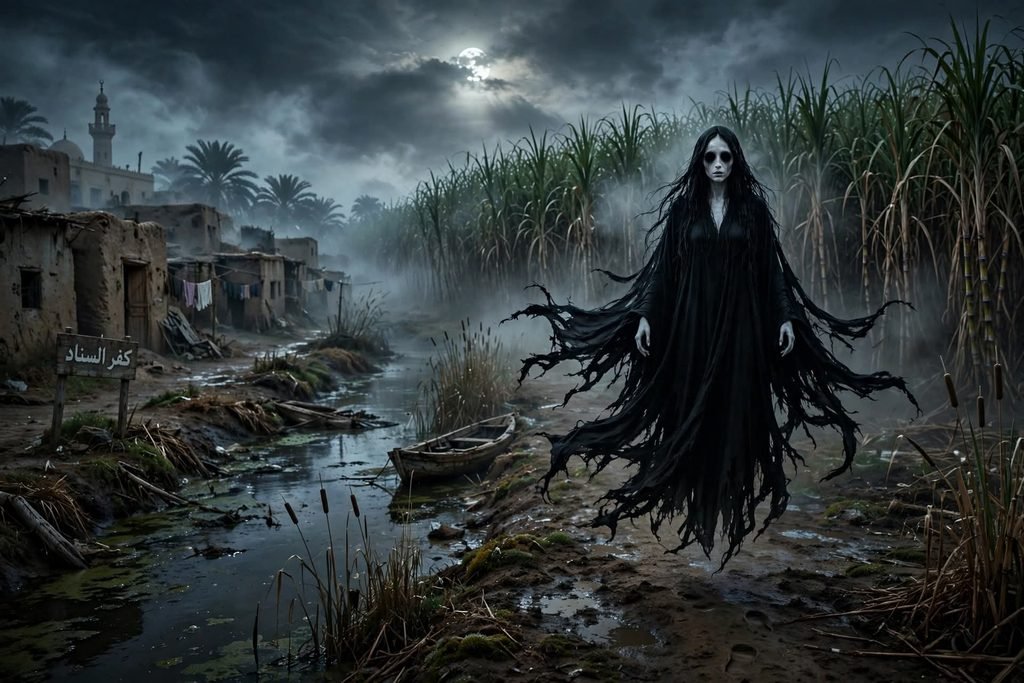
It was shaped like a man, but the proportions were wrong. Its shoulders were impossibly broad, and its head rose higher than the figure of any ordinary person should. The shadow stood against the direction of the sunlight, darkening the ground as if something enormous were blocking the sky.
I looked up.
The sky was empty.
The shadow did not move like a shadow should. It shifted its head slowly, as though examining us.
Then it disappeared.
A moment later, I saw another shadow pass overhead.
It was shaped like a bird, but far too large. Its wings swept across the mound, covering the ground in darkness before the shape descended towards a narrow depression in the earth.
It seemed to enter the ground itself.
Sami grabbed my arm.
“William,” he whispered. “Do you see that?”
I could not answer.
We stood motionless until the sunlit mound appeared ordinary again. The flames were gone. The shadows had vanished. Only the sound of our breathing remained.
Then I remembered something.
The map showed a line running north of the place where we had been digging. It was so faint that I had almost mistaken it for a crease in the paper.
I walked towards the marked spot.
Sami swore at me, then followed.
We began digging again.
This time, the soil moved more easily, but before we had reached much depth, the earth shifted. A load of loose dirt slid down into the hole, almost filling it. We cleared it away and tried again.
The same thing happened.
Each time we dug deeper, the hole filled with fresh soil. There was no slope above us that could explain it, and no obvious source for the dirt. We moved to another spot, but the earth collapsed there too.
It was as if the mound were closing itself over whatever lay beneath it.
We worked for what felt like hours. My hands were aching, and sweat ran into my eyes. Sami had stopped speaking altogether. Every time I looked at him, his gaze drifted towards the place where the enormous shadow had appeared.
Finally, the pickaxe struck something solid.
The sound was different from the dull crack of stone. It rang out with a hollow note, as though we had struck a large chamber beneath the earth.
We cleared the loose soil.
A flat, dark surface emerged.
At first, I thought it was a natural slab of rock. Then we uncovered the edge and found a straight line running across it. Beneath the dirt lay the upper section of a massive stone door, fitted so precisely into the surrounding rock that it seemed to be part of the hill itself.
Neither of us had expected to find anything like it.
I brushed soil from the stone and found markings carved into its surface. Some resembled Roman symbols. Others were so strange that I could not decide whether they were letters, decorative patterns, or something entirely different.
At the centre of the door was a circular impression.
The same circle appeared on my grandfather’s map.
My hands began to tremble.
We had found the entrance.
Sami took a step back.
“William, stop.”
I did not look at him. I was staring at the door, trying to understand how such a structure could have remained hidden beneath the mound for so long.
Then the breathing returned.
This time, it came from the other side of the stone.
A deep, steady inhale passed through the narrow space around the door. The air seemed to draw inward, as though the ground itself were breathing.
I stepped away.
The enormous black shadow appeared at the top of the mound.
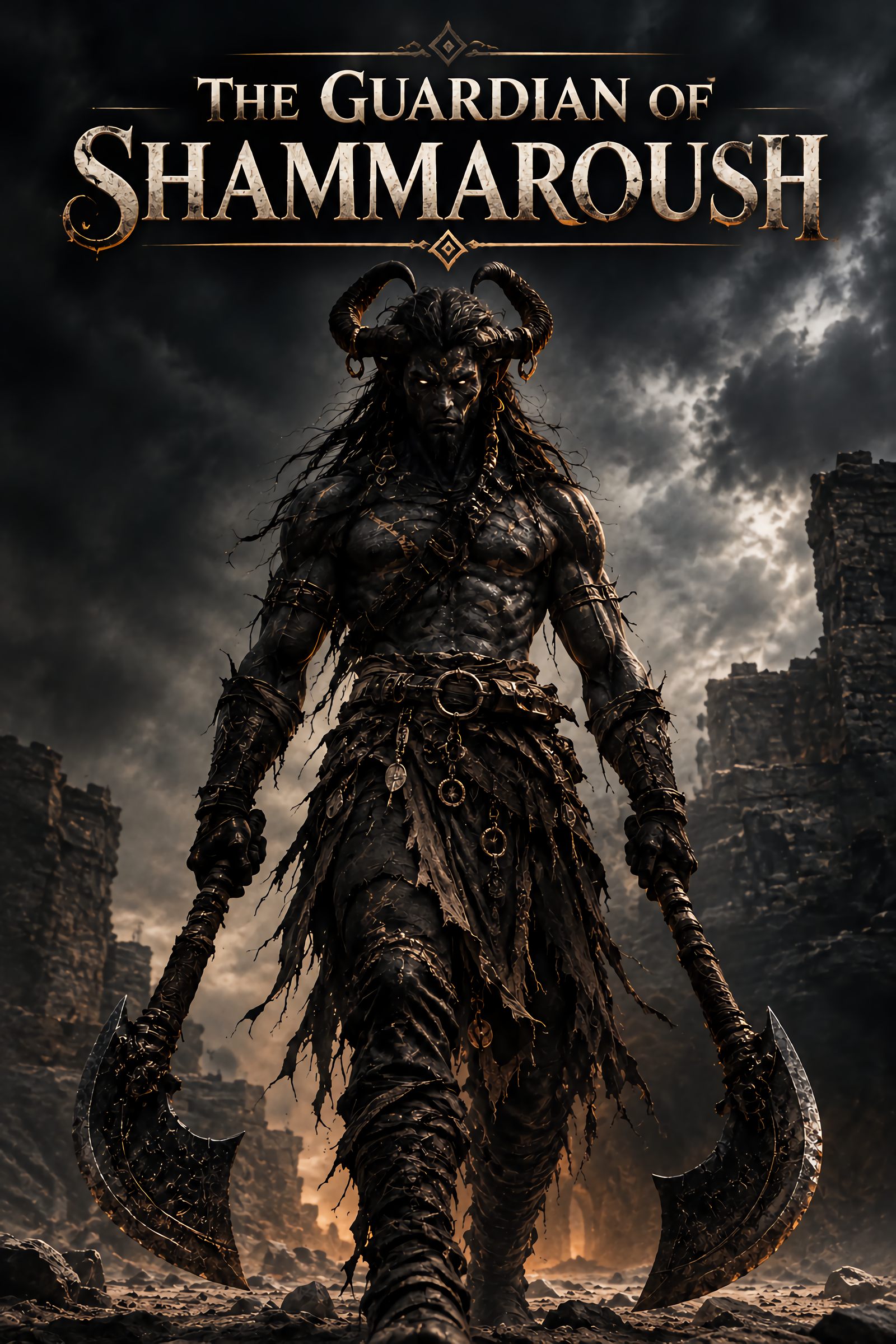
It was no longer merely a shape on the earth. It stood before us, taller than any man, its body so dark that the afternoon light seemed unable to touch it. Its arms hung almost to its knees. I could not make out a face, only two faint points of light where its eyes should have been.
Sami stumbled backwards.
The creature looked directly at me.
Then it spoke.
The voice came from the darkness where its face should have been, yet I heard every word clearly. It spoke in French, though the sound was so deep that the ground seemed to vibrate with it.
“You have brought your grandfather’s map back to me.”
I could not move.
The creature tilted its head.
“I am the guardian of what lies beneath Shammaroush,” it said. “I am one of the marid, among the mightiest of the jinn. This treasure was sealed away long before you were born, and it was not buried for men to claim.”
Sami made a small, strangled sound beside me.
I wanted to ask how it knew about my grandfather. I wanted to ask what had happened to Riad, and why the ground kept closing over the hole. But when I tried to speak, my throat felt too tight.
The creature seemed to understand my thoughts.
“Your grandfather stood where you stand now,” it said. “He came with the same hope in his heart. He believed that knowledge, courage, and a clever map would be enough.”
It took one slow step towards us.
The earth beneath its feet did not crack. No grass bent beneath its weight. It was as though the creature stood between the world we knew and something beyond it.
Then it spoke the words that have haunted me ever since.
“You will not be cleverer than your grandfather.”
The stone door gave a low, grinding groan.
We both turned.
A thin line of darkness appeared around its edges. The door began to move, not outward or inward, but downward into the earth, as though an unseen hand were pulling it into the depths. Dust spilled from the opening. Cold air rushed out, carrying the smell of wet stone, old metal, and something else I could not identify.
The creature remained beside us.
For one foolish moment, I thought it was allowing us to enter.
I looked at Sami. He was trembling, but neither of us moved away. We had crossed too many lines already. We had ignored the warnings, the flames, the shadows, the impossible breathing. Now the entrance stood open, and beyond it lay the answer to the map.
I raised the lantern and stepped inside.
The passage descended at a shallow angle. Its walls were made of enormous fitted stones, darkened by age and dampness. Strange markings ran along them. Some were Roman, or at least similar to the inscriptions I had seen in books. Others were unlike anything I had encountered before.
Sami followed closely behind me.
We walked in silence until the passage opened into a chamber.
The light from the lantern fell across a floor covered in dust. Beyond it stood rows of clay vessels, broken statues, and chests reinforced with dark metal. Some had collapsed, spilling their contents across the stone.
Gold.
There was gold everywhere.
Coins lay scattered across the floor, mixed with silver pieces and small objects whose purpose I could not guess. A tarnished bronze vessel rested beside a carved stone figure. At the far end of the chamber, a larger chest stood beneath an archway, its lid slightly open.
For several seconds, neither Sami nor I spoke.
The treasure was real.
I knelt and lifted a coin from the floor. Its surface was worn, but I could make out the profile of a Roman emperor. It was cold against my palm.
Sami stared at the open chests.
“My God,” he whispered.
I should have put the coin back and walked out. Instead, I stood and took a few steps towards the larger chest.
Something moved in the darkness beyond it.
I stopped.
The lantern flame bent sideways, though there was no wind. The air grew colder. Behind us, the passage seemed to stretch farther away than it had moments earlier.
Then I heard the creature’s voice.
Not from the entrance.
From everywhere.
“You were warned.”
Sami grabbed my shoulder and pulled me around. The chamber had changed. The shadows between the pillars were deeper, and the floor seemed to slope away into a darkness that could not have fitted beneath the hill.
I looked back towards the treasure.
The gold was still there, but it no longer reflected the lantern light. Every coin had become dull and black, as if the colour were being drawn out of it.
A heavy beating sound came from above us.
Wings.
The enormous shadow of the bird swept across the chamber, passing over the chests and the stone walls. I could hear the rush of air, though there was nowhere for a bird of that size to fly.
Sami shouted my name.
I tried to reach him, but the ground seemed to move beneath my feet. The lantern slipped from my hand and struck the stone. Its flame went out.
In the darkness, I felt something brush past me.
Then came a sound like a great door slamming shut.
I remember Sami calling out once.
I remember trying to answer.
After that, everything disappeared.
When I opened my eyes, sunlight was shining into my face.
For a few seconds, I had no idea where I was. My body ached, and my mouth was dry. I sat up slowly and found Sami lying beside me on a patch of hard, dusty ground.
He was alive.
I crawled towards him and shook his shoulder until he opened his eyes.
Neither of us spoke at first. We were trying to understand what had happened.
We were no longer inside the hill.
We were lying beside an old, deserted track, far from the mound. The landscape was unfamiliar, and the road we had come along was nowhere in sight. There were no tools beside us, no lantern, no bags, and no obvious way to explain how we had reached that place.
I checked my watch.
It had stopped.
Sami looked at his phone. The battery was dead.
We walked until we found a road, then eventually reached a place where we could get transport back towards Mahdia.
The whole journey, we said very little.
The next morning, we returned to the mound.
I expected to find our tools scattered across the ground, or at least some sign that we had spent hours digging there. Instead, the earth was smooth and undisturbed. The dry grass stood where it had stood before. The scattered stones were unchanged.
There was no hole.
There was no stone door.
There was not even a patch of loose soil to suggest that anyone had dug beneath the surface.
We searched for hours.
I walked around the mound several times, following the lines on my grandfather’s map. Sami checked the ground with his foot, looking for a depression or a hollow sound. We found nothing.
It was as though the entire excavation had never happened.
I kept the map. I still have it today.
For a long time, I tried to find a rational explanation. Perhaps we had suffered some kind of shared hallucination brought on by exhaustion and fear. Perhaps there had been a gap in our memories. Perhaps someone had moved us while we were unconscious, although I could never understand why anyone would go to such trouble or how they could have erased every trace of our work.
Sami never offered an explanation. Whenever I mentioned the hill, he changed the subject.
We never contacted Riad again.
I returned to France without a single coin, photograph, or object from the chamber. No proof that the treasure existed. No proof that the door had ever opened. Nothing except the map my grandfather had left me and memories I could not explain.
Sometimes I take the map out and study the markings. The cross is still there, drawn in red pencil. The lines are still faded. My grandfather’s handwriting remains in the corner.
I have often wondered what happened to him when he visited Shammaroush. Did he see the same creature? Did he enter the chamber? Did he escape with his life because he had understood something that I had not?
The guardian said that my grandfather had stood where I stood.
It said that I would not be cleverer than him.
I have never returned to the hill, and I never intend to.
But there is one question I cannot put aside.
If we had truly entered that cave and seen the treasure, why had the world erased every trace of it?
And if we had imagined the entire experience, how could the creature have known my grandfather’s name?
I still do not know what happened beneath Shammaroush.
I only know that, for one brief moment, I stood before something that claimed to be older than the ruins around it—and that it seemed entirely certain I would come looking for it.