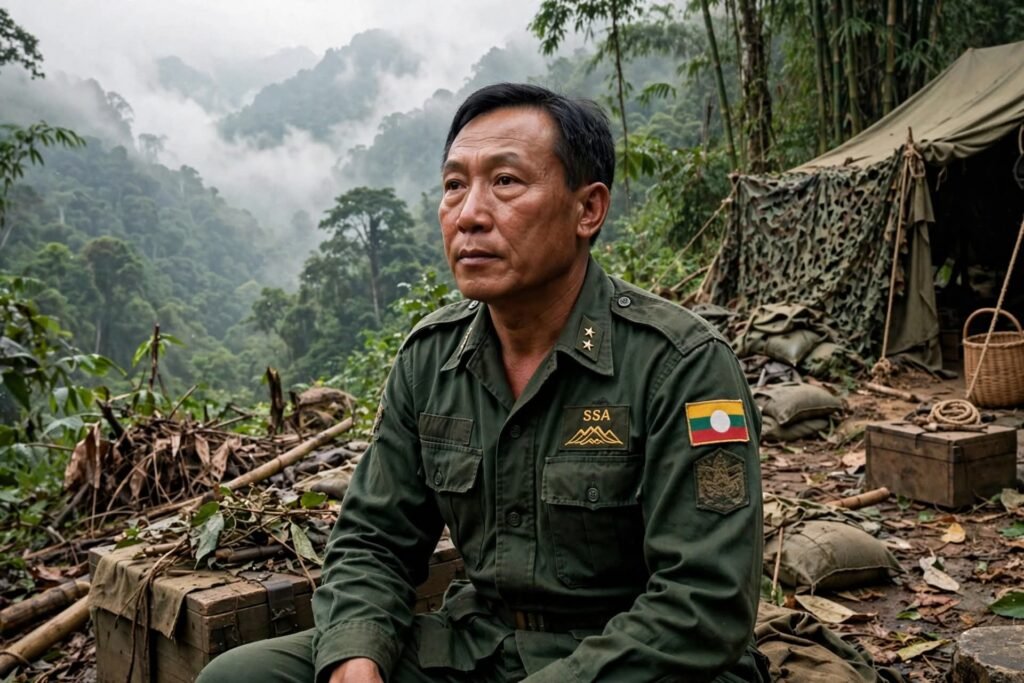
From KMT-trained militia leader to ruler of the Golden Triangle, Khun Sa built a 20,000-man army on opium.
His is not a fictional story but a documented history of chaos, power, and drugs in Southeast Asia. Born Chang Chi-fu on February 17, 1933, and died on October 26, 2007, he became known as Khun Sa, the most powerful opium warlord of the 20th century.
Foundation and Expansion
He received his military training among the retreating Kuomintang (KMT) forces who fled into Burma after the Chinese Civil War. He then formed a local militia, the Ka Kwe Ye, sponsored by the Burmese government to fight Shan rebels. He exploited its strategic location and government backing to take control of the poppy-growing regions of the Shan hills.
Arrest and Bargain
In 1969, he was arrested and imprisoned in Mandalay. In 1973, his men kidnapped two Soviet doctors, forcing the government into a prisoner exchange that secured his release. This incident proved his power extended far beyond the jungle.
Managing the Network
He founded the powerful Mong Tai Army, at its peak numbering 20,000 soldiers. He organized a sophisticated network for processing and exporting heroin through the rugged mountain borders of Burma, Laos, and Thailand – the infamous Golden Triangle. During the 1980s, his network supplied up to 80% of the heroin on the streets of New York.
The Offer to America
At the height of his power, he made a shocking proposal to the U.S. Drug Enforcement Administration: he offered to sell his entire opium crop to the U.S. government to be destroyed, in exchange for development aid for his farmers. The offer was rejected.
The Final Deal
Following internal divisions and increasing military pressure, he signed a surrender agreement with the Burmese government in 1996. He laid down his weapons in exchange for retirement and permission to live freely in the capital, Yangon, without being extradited to any foreign country. He died a wealthy businessman in 2007.
Source: Khun Sa on Wikipedia